
Game Overview
- Primary category: Action
- Best for: Browser, Chromebook, No Download
- Quality score: 92/100
- Platform: Browser, no download, Chromebook friendly
- Source host: Classroom6x Mirror
1. HOOK
The tower never stops rising, and neither does the speed at which blocks fall toward you. By minute three, what felt manageable has become a scramble of stacked geometry and split-second placement. Babel Tower runs on a single cruel premise: time makes everything harder, and there's no version of the game where it slows down.
2. WHAT IT IS
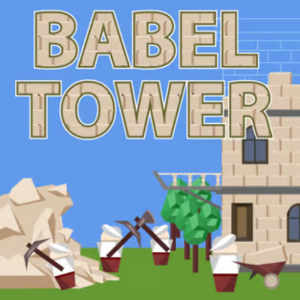
Babel Tower is a browser-based action title built around vertical block stacking under increasing pressure. On screen you see a growing structure, a set of incoming pieces, and a clock that quietly governs the entire difficulty curve. You control placement and timing, dropping pieces onto the tower to keep it stable and climbing.
Misalignment causes collapse. A poorly placed block can topple a section, and a full structural failure ends the run. Survival depends on reading the next piece, judging the gap, and committing before the timer tightens the window. Scoring ties directly to how long you last and how high the tower reaches before it falls.
3. HOW TO PLAY
Open the game and you're dropped straight into a live tower with no tutorial buffer. Use the keyboard arrows or WASD to position pieces, and the mouse to fine-tune placement or rotate where the layout allows. Click or press to drop. That's the entire input set.
The non-obvious mechanic: stability isn't just about visual alignment. Weight distribution across the tower matters, so a piece that looks centered can still destabilize a top-heavy structure underneath it. Beginners almost always rush early placements while the timer is generous, building a sloppy base they can't recover from later. Slow down at the start. Your first ten blocks decide the run.
4. HOW IT DIFFERS
Tetris rewards line completion and clearing rows to manage a finite well. Babel Tower discards that idea entirely. Nothing clears here — the structure only grows, and your goal is endurance against gravity rather than efficient elimination. Where Tetris gives you breathing room through clears, this game offers none, because the tower is permanent and every mistake stays in the build.
The real weakness shows up in long sessions. The core loop is narrow, and once you understand weight management, the moment-to-moment decisions stop changing. Marathon runs blur together because the only variable is speed, not strategy. After forty minutes, you're doing the same thing faster, not differently.
5. WHO SHOULD SKIP IT
Anyone who plays for progression systems will walk away frustrated. There are no unlocks, no upgrade trees, no cosmetic rewards that change how a run feels — just the tower and the timer, repeating. If you need a game to acknowledge your effort with something tangible afterward, this one ignores you completely. People who derive satisfaction from gradually mastering a deep system will find the ceiling here lower than they'd like, and they'll hit it within an afternoon.
6. TIPS
- Build a wide, deliberately overbuilt base before the speed ramps up. It feels wasteful to spend early seconds on something that doesn't score, but a heavy foundation absorbs the wobble that kills most high runs. The slow opening pays off past the two-minute mark.
- Watch the section directly below your current placement, not just the top. Collapses usually originate from instability that started several rows down. Correcting a lean early is far cheaper than recovering from a topple.
- Counterintuitively, leave small gaps instead of forcing perfect contact on every piece. Tightly packed towers transfer shock through the whole structure, while minor spacing lets sections flex independently. A slightly imperfect tower often outlasts a flawless one.
- Take a break the instant your placements start feeling automatic. Fatigue causes the exact rushed drops that end runs, and the timer punishes inattention harder than inexperience. Stepping away for two minutes resets your reaction window better than any in-game tactic.
7. COMPATIBILITY & ACCESS
Babel Tower runs as one of the more lightweight HTML5 browser games, loading directly in Chrome, Firefox, Edge, or Safari without any download or plugin. Because it leans on standard keyboard and mouse input, it sits comfortably among browser games for school Chromebook unblocked setups where installs are blocked but web pages load freely. The footprint is small enough that older hardware handles it without stutter, which matters on shared lab machines.
Mobile support is functional but compromised, since touch controls can't match the precision the timer demands during late-game speed. Network-restricted environments rarely flag it, making it one of the safer unblocked games to reach on filtered connections. No account, no login, no saved state across devices — you load it and play.
8. FINAL TAKE
Babel Tower is honest in a way most browser titles aren't, and that honesty is also its limit. It promises one mechanic executed cleanly, delivers exactly that, and refuses to pretend there's more underneath. Whether that's a virtue or a flaw depends entirely on what you bring to it — some players want a clean test of nerve, others want a system to dismantle, and this only serves the first group. I'd argue it deserves a slot in any quick-session rotation precisely because it doesn't waste your time with padding. It knows what it is. Sharp, shallow, and unapologetic.